TSIL DRIVER
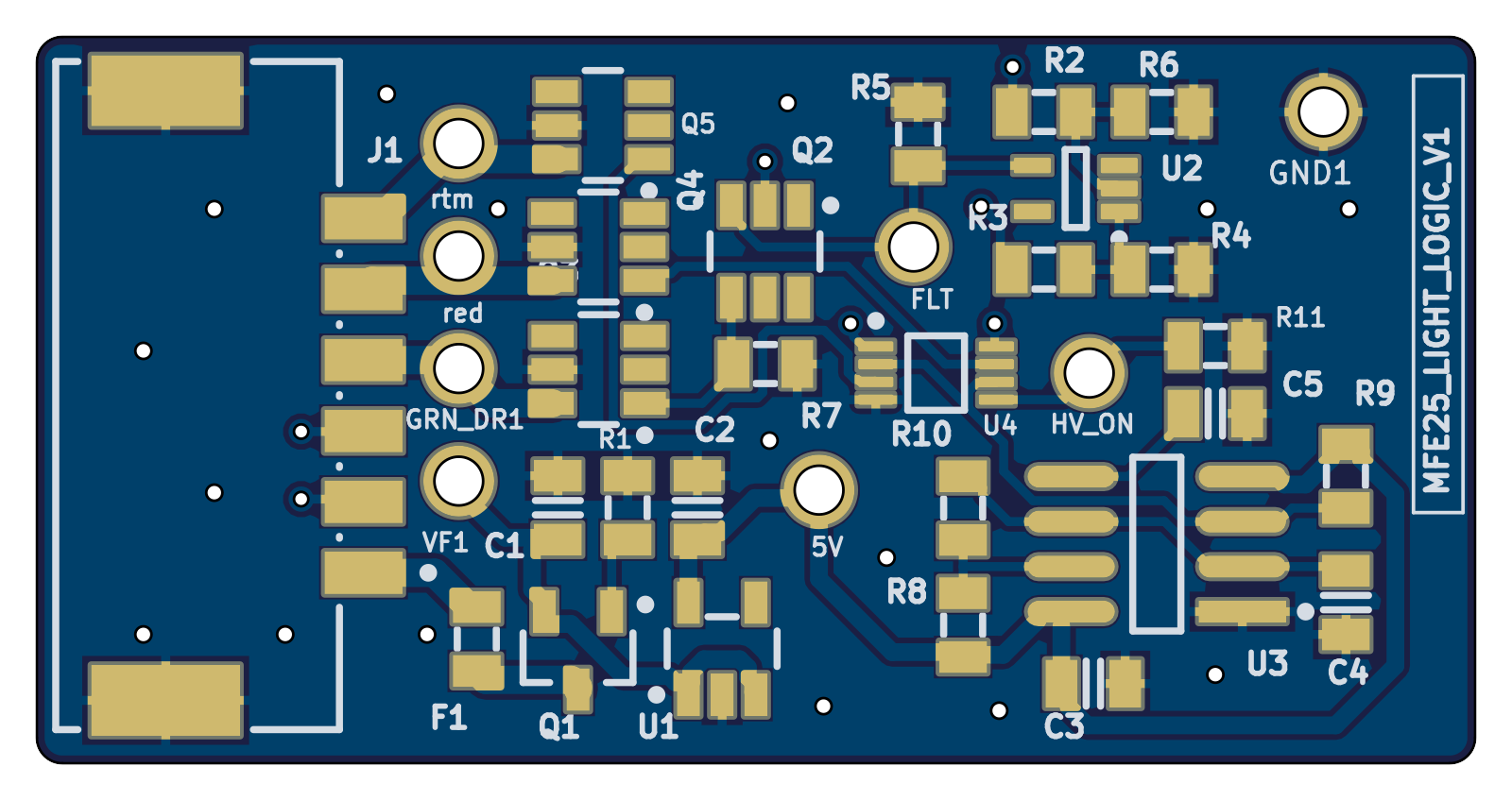
Drives the tractive-system indicator lights: static green when the system is healthy, flashing red when the BMS or IMD reports a fault. Also passes the ready-to-move signal through to the RTM light.
BMS_SIG and IMD_SIG are active-low. Either one asserted drives the NOR gate high, setting FLT. FLT opens an N-channel MOSFET and gates the red LEDs, but not directly: AND gates combine FLT with LIGHT_CLOCK, a square wave from a 555 timer, which is what produces the flash. With FLT low, Q2 conducts and powers Q3, holding the green LEDs static. HV_ON_SIG high passes straight through as RTML_OUT to the ready-to-move light bar.
Redesigned to a low-side switch scheme driving the aluminum-core light bars, switching the ground side keeps the FETs cool and the light bars dumb, which is exactly what you want when the bars live on metal-core board with no room for logic.
NOR gate (SN74LVC1G02) collects the active-low BMS/IMD faults into FLT; the NE555 generates LIGHT_CLOCK; the dual AND (SN74LVC2G08) gates the clock into the red drain and the HV_ON signal into RTML_OUT, each through its own DMN3135 low-side FET.
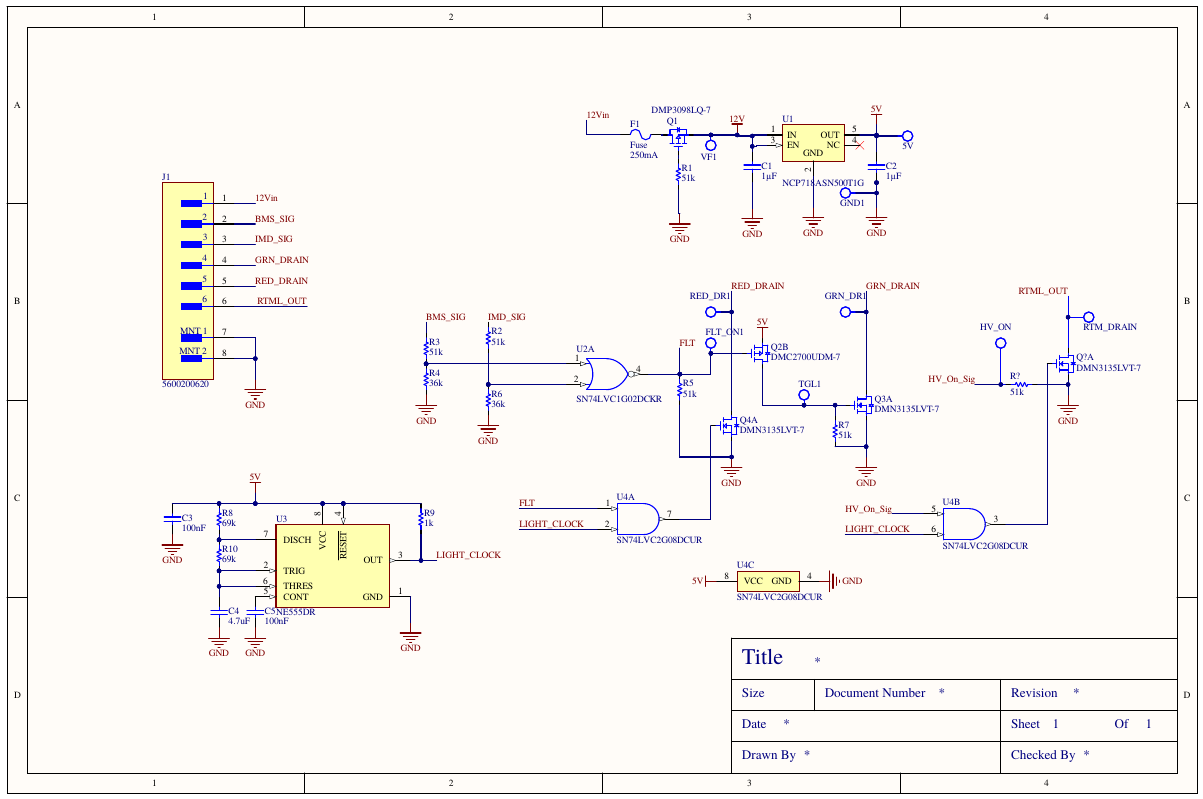
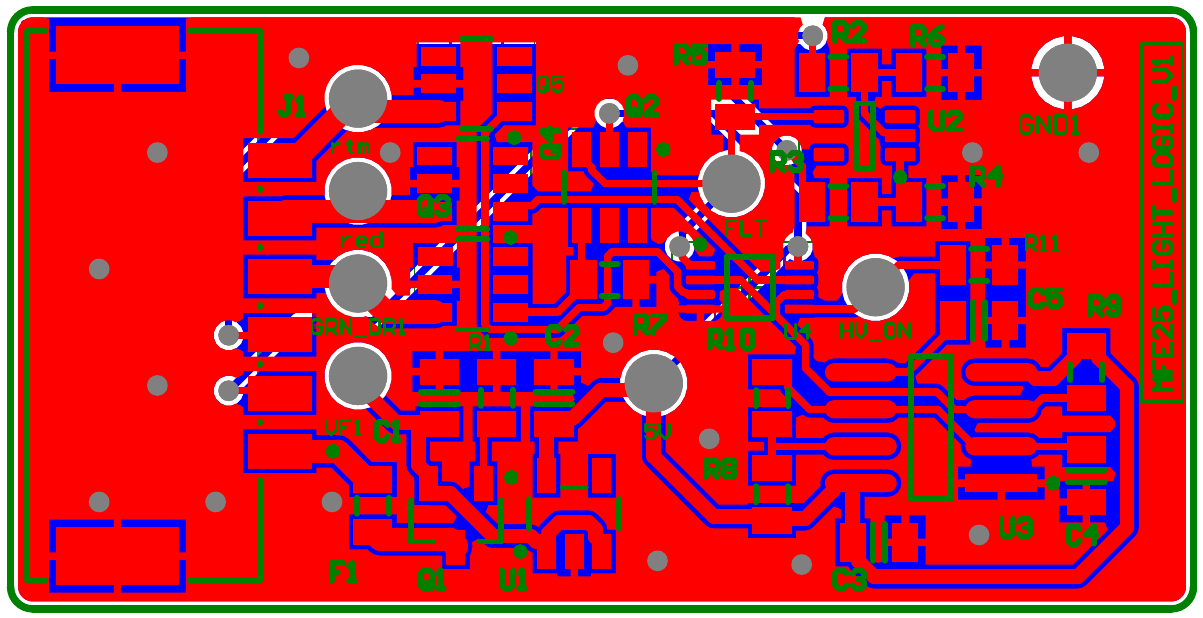
Discrete gates and a 555 instead of a microcontroller. An MCU would have been smaller, but a fault indicator shouldn't depend on firmware booting or staying alive, and with discrete logic every node in the chain is directly probeable.